- Flooring
- Hardwood
- Luxury Vinyl
Hardwood vs. LVP: Which Is the Better Investment for Calgary Homes?
May 5, 2026
Written by the Floorscapes Team
Every January, homeowners across Haysboro, Kingsland, and Willow Park notice the same thing: gaps forming between their hardwood planks. Not because the floor was installed wrong.
Because Calgary’s winters are genuinely extreme for wood.
When outdoor temperatures plunge below -20°C and your furnace runs nonstop, indoor relative humidity can drop below 20%. Real wood shrinks. And it doesn’t always come back the same way in spring.
That conversation happens at Floorscapes every week. Since 1996, we’ve helped over 20,000 Calgary homeowners navigate this exact decision: the look, warmth, and resale value of hardwood versus the practical resilience of luxury vinyl plank.
This guide breaks down the real trade-offs, room by room and dollar by dollar, so you can make the choice that actually fits your Calgary home. Call us at (403) 296-0985 for a no-pressure consultation with someone who knows your neighbourhood’s subfloor conditions.
Why Does Calgary’s Climate Change the Hardwood vs. LVP?
Most flooring comparison guides are written for a generic North American audience. Calgary is not a generic market. The combination of dry winters, dramatic Chinook temperature swings, and freeze-thaw cycles between October and April creates conditions that stress flooring in ways homeowners in Vancouver or Toronto simply don’t experience.
The Humidity Problem (and Why It Matters More Here Than Anywhere Else)
The National Wood Flooring Association (NWFA) recommends maintaining indoor relative humidity between 30% and 50% to keep hardwood floors dimensionally stable. In Calgary, hitting that lower threshold in winter requires active effort.
During a sustained cold snap, heated indoor air can drop to 15% to 20% RH without humidification. Solid hardwood responds by contracting, pulling planks apart and opening gaps at the seams.
When spring arrives and humidity climbs back toward 50% to 60%, the wood absorbs moisture and swells back, but not always evenly. Over years, this seasonal cycling causes cupping, warping, and finish cracking.
The sweet spot for Calgary hardwood is maintaining 30% to 35% RH through winter with a whole-home humidifier. That’s achievable, but it’s an ongoing commitment that adds cost and responsibility most buyers don’t anticipate.
LVP is dramatically more stable in response to humidity changes. It won’t cup, gap, or absorb moisture the way hardwood does. For homeowners who don’t want to manage a humidification system, that stability is a meaningful practical advantage, though adequate expansion gaps at walls and transitions remain important, especially in rooms with large south-facing windows.
How Do Calgary Chinooks Affect Your Flooring?
Calgary is famous for its Chinook winds: the warm, dry air that rolls off the Rockies and can raise temperatures by 20°C or more within just a few hours. The Calgary Stampede may be the city’s most celebrated annual event, but the Chinook is the daily wildcard that shapes how homes need to be built and maintained here.
For hardwood floors, a Chinook creates a humidity whipsaw. Your indoor environment has been running dry for weeks, and then outdoor temperatures surge, briefly pushing ambient moisture up before the next cold snap pulls it back down.
Solid hardwood can experience significant stress during these rapid swings, particularly in homes with large windows and limited humidity control.
“In our experience advising Calgary homeowners, engineered hardwood is the sweet spot for most above-grade rooms. You get the warmth and the real wood grain, but the layered construction handles our humidity swings far better than solid wood. We’ve seen solid hardwood floors gap an eighth of an inch or more in January, that’s a lot of stress on any floor, and it’s entirely preventable with the right product choice.”
— Floorscapes Design Team
Engineered hardwood, real wood on top with a plywood or HDF core underneath, resists humidity-driven movement significantly better than solid wood while maintaining the authentic look and feel that buyers want. It’s often the recommendation we make for above-grade rooms in Calgary homes where hardwood is the goal.
Pro-Tip from the Floorscapes Team: In 1960s and 70s-era homes in Kingsland and Haysboro, we consistently find concrete slab subfloors with elevated moisture readings during the spring thaw. Before we install anything, hardwood or LVP, we always run a full moisture assessment using in-situ relative humidity testing (ASTM F2170), not just a surface reading. Skipping that step is the single most common reason floors fail within the first two years, regardless of material.
In our Calgary basement LVP installs over the past five years, in-situ testing has flagged elevated slab moisture in roughly one in three homes, most of which showed no visible surface signs at all. For context: both hardwood and most rigid-core LVP require the subfloor to be flat within 3/16 of an inch over a 10-foot span. Many older Calgary slab homes don’t meet that standard without grinding or self-levelling compound first.
Hardwood vs. LVP: The Real Decision Guide for Calgary Homes
Let’s put the products side by side for what Calgary homeowners actually need to know.
Hardwood: Still the Premium Choice in the Right Rooms
Hardwood, whether solid or engineered, brings things to a home that no synthetic floor replicates: the acoustic warmth underfoot, the grain variation that shifts with light, and the ability to sand and refinish rather than replace. A well-maintained hardwood floor in a Calgary home can last 50 to 100 years. An engineered floor can typically be refinished one to three times over its life, depending on wear layer thickness. Products with a 3mm or thicker wear layer support multiple refinishes, while thinner engineered lines may allow only one.
Before installation, solid hardwood requires a minimum of five to seven days of acclimation inside the actual room, with your HVAC running at normal operating temperature, so the wood stabilizes to your home’s specific humidity conditions.
Engineered hardwood typically needs three to five days. LVP requires no acclimation period, which is one reason it’s faster to schedule.
From a resale standpoint, hardwood continues to outperform. According to the National Association of Realtors’ Remodeling Impact Report, installing new hardwood yields approximately 118% cost recovery in added home value for US markets, and Alberta real estate professionals consistently echo similar patterns for Calgary’s established neighbourhoods.
Real estate agents across the city report that hardwood listings in the $700K to $1.2M+ price range in areas like Pump Hill, Eagle Ridge, and Palliser move faster and command stronger offers. For Calgary-specific resale guidance, the Alberta Real Estate Association tracks buyer preference data your agent can reference directly.
The best rooms for hardwood in a Calgary home:
- Living and dining rooms (above grade, climate-controlled)
- Bedrooms (lower foot traffic, consistent humidity)
- Main-floor open-plan areas where visual continuity matters for resale
- Renovations in established south Calgary neighbourhoods targeting the move-up buyer
Brands worth knowing at Floorscapes for Calgary conditions: Preverco and Lauzon both offer engineered hardwood lines built specifically for Canada’s dry climate, with Canadian-specific installation guidelines that account for our humidity ranges. Shaw Floors carries wide-plank engineered options that hold up well through seasonal transitions.
Luxury Vinyl Plank: The Practical Powerhouse for Calgary’s Toughest Spaces
LVP has come a long way from the vinyl of 20 years ago. Today’s products, particularly COREtec and Torlys from Floorscapes’ lineup, feature 6 to 8mm rigid cores (either stone-based SPC or wood-composite WPC), embossed-in-register texture that feels like real wood grain, and acoustic underlayment that softens the hollow sound some people associate with floating floors.
The case for LVP in Calgary comes down to three realities:
1. Basements. Solid hardwood does not typically do well below grade in Calgary. The freeze-thaw moisture cycle that affects concrete slabs from October through April makes wood flooring a liability in finished basements. LVP handles it without complaint.
2. High-traffic family spaces. Mudrooms, kitchens, and main entries see Calgary winters at their worst: salt, slush, wet boots, and dogs shaking off snowmelt. LVP is 100% waterproof through the wear layer and handles that abuse without warping or staining the finish.
3. Budget-conscious renovations. At $5 to $10 per square foot installed versus $10 to $19 for hardwood, LVP lets homeowners cover more ground without cutting corners on quality. For a full home renovation in Fairview or Acadia, that cost difference across 2,000 square feet is significant.
One spec that matters before you buy: residential LVP wear layers range from 12 mil (0.3mm) for light use up to 28 mil (0.7mm) or more for high-traffic family homes. That wear layer thickness determines how long your floor actually lasts. Ask your Floorscapes consultant which wear layer rating matches your household before you commit.
“LVP has genuinely changed the conversation for basements and family rooms. With products like COREtec and Torlys, we’re putting LVP in spaces where it used to be carpet or nothing. The realistic wood look is there, it’s waterproof, and it doesn’t care what Calgary’s Chinooks are doing outside.” — Floorscapes Installation Team
The honest trade-off: LVP cannot be refinished. When it reaches the end of its lifespan, typically 15 to 25 years depending on wear layer and traffic, it needs to be updated. Many Calgary homeowners treat this as an advantage. Flooring styles shift over twenty years, and LVP lets you refresh a room without the cost of refinishing.
“We had been to several flooring stores and found Floorscapes to have the best quality and value. The wide plank hardwood looks amazing and the installation was finished on schedule.” Steven E., Haysboro — Wide Plank Hardwood Installation
Hardwood and LVP Maintenance in Calgary: What to Expect?
Getting the floor in is one thing. Keeping it looking great through Calgary winters is another conversation entirely.
How To Maintain Hardwood Throughout The Searsons
Winter (November–March): Your biggest enemy is low humidity. Run a whole-home humidifier and aim to keep indoor RH between 30% and 35%. Avoid wet mopping entirely. Use a microfibre mop that feels barely damp to the touch, with no water transferring to a dry hand pressed against the mop head.
Spring thaw (April–May): Watch your entryways. Snowmelt and slush-soaked boots tracking across hardwood floors is one of the most common sources of moisture damage in Calgary. A proper entry mat system and a quick wipe-down routine matter more here than almost anywhere else in Canada.
Summer: Calgary’s summers are relatively low-humidity, averaging around 45% RH, so most hardwood floors fare well. In rooms with heavy south-facing sun exposure, consider window film to reduce UV fading over time.
According to the NWFA, hardwood should never be cleaned with steam mops. Use a pH-neutral hardwood cleaner like Bona. Alkaline household cleaners (most multipurpose sprays run above pH 9) slowly strip the aluminum oxide finish on hardwood and cloud the wear layer on LVP with repeated use.
One maintenance mistake that shortens floor life specifically in Calgary: filling the gaps that appear each January with caulk or wood filler. Those gaps are usually a humidity response, not a defect. Sealing them each year masks a humidity management problem that needs to be addressed at the source.
LVP Maintenance: Low Bar, High Reward
LVP is genuinely low-maintenance by comparison. Regular sweeping, occasional damp mopping with a pH-neutral cleaner, and felt pads under furniture covers the full routine. Avoid rubber-backed mats entirely. Plasticizers in the rubber migrate into LVP’s wear layer over time, creating a permanent yellow stain that no amount of cleaning will remove, and the only fix is plank replacement.
Steam mops are also a hard no. They force moisture into the click-lock joints regardless of core type, degrading the locking mechanism and causing planks to lift at the seams, often long before any visible surface damage appears.
In Calgary basements and below-grade spaces, watch for moisture getting under the floor rather than through it. A proper moisture barrier on the concrete slab and a drainage membrane for below-grade installs protect the floor system from the one failure mode LVP can’t handle on its own.
“We’ve used Floorscapes several times over the last 10 years from full renovations to refinishing our hardwood. Their crews are on time, very professional, and make sure you’re happy with the end result.” Lana B., Kingsland — Hardwood Installation and Refinishing
How to Choose a Flooring Installer in Calgary
The floor you choose matters. So does who installs it. Here’s what to ask before signing any contract:
1. Do you assess the subfloor before quoting? Any reputable Calgary installer will want to see the actual subfloor condition before giving a firm price. Concrete slab homes, common in SE Calgary’s established neighbourhoods, can have levelling issues, moisture concerns, or old adhesive residue that affects both cost and product selection. In older slab homes, achieving the required flatness spec often means grinding or self-levelling compound before a single plank goes down.
2. Will you do a proper moisture test? A proper moisture assessment on concrete slabs means more than a surface pin reading. The current Canadian standard is an in-situ relative humidity test (ASTM F2170), which measures moisture conditions inside the slab where they actually affect your floor. If an installer doesn’t mention in-situ testing, ask directly. Skipping it is the most common shortcut that leads to failed floors within two to three years.
3. What does the warranty actually cover? Watch for vague language like “manufacturer defects only.” A quality installer backs both materials and installation labour. At Floorscapes, we supply and install, which means one point of contact if anything needs attention after the job is done, with no bouncing between a materials supplier and a separate contractor.
4. Red flags to watch for in any quote:
- No in-person site visit before pricing
- No mention of subfloor prep or in-situ moisture assessment
- A quote covering only materials with vague labour estimates
- No written warranty on installation workmanship
Floorscapes has been Calgary’s trusted hardwood and LVP flooring partner since 1996, serving over 20,000 Calgary homeowners and holding NWFA membership that reflects our commitment to installation standards. Our in-house teams handle everything from subfloor assessment through final inspection. Our showroom team will walk you through exactly which product fits your specific home, not just what’s popular right now.
Frequently Asked Questions
How much does it cost to install hardwood or LVP flooring in Calgary in 2026?
For LVP, expect $5 to $10 per square foot fully installed for a quality product with professional labour. Engineered hardwood runs $8 to $15 per square foot installed, and solid hardwood $10 to $19 depending on species and subfloor complexity. Subfloor prep in older Calgary homes can add $1 to $3 per square foot on top of those numbers. Contact Floorscapes for a quote specific to your home.
Does Calgary’s dry winter climate really damage hardwood floors?
es. When indoor relative humidity drops below 25% to 30% during cold snaps, hardwood planks contract and gaps form between boards. Without a whole-home humidifier maintaining 30% to 35% RH, even premium hardwood floors will show seasonal movement. Engineered hardwood is significantly more resistant to this movement than solid wood, making it the smarter choice for most Calgary above-grade installs.
How long does a hardwood or LVP installation take in Calgary?
Most residential projects run 3 to 5 days from installation start to move-in ready. Solid hardwood requires 5 to 7 days of acclimation before installation begins, and engineered hardwood needs 3 to 5 days. LVP requires no acclimation period at all, which is one reason it’s faster to schedule. At Floorscapes, we coordinate scheduling, material delivery, and installation through our in-house team, and we’ll give you a realistic timeline before the project begins.
How do I know when my floor needs replacing versus refinishing?
For hardwood, refinishing is viable as long as the wear layer is thick enough to sand. Engineered floors with a 3mm or thicker wear layer can typically be refinished two to three times, while thinner engineered lines may support only one. Signs you need full replacement rather than refinishing: deep structural damage, severe cupping or warping, widespread moisture damage, or wear that has reached the wood core. LVP cannot be refinished, so once the wear layer is significantly scratched or the core begins to delaminate, replacement is the path forward. Reach out to our team for an honest assessment of your existing floors.
Is hardwood or LVP better for homes with radiant in-floor heating in Calgary?
Both options work with in-floor radiant heat, but engineered hardwood is generally preferred over solid wood. Its layered construction resists the thermal expansion that solid planks experience during heating cycles. LVP is also compatible with most radiant systems. Look for products rated for use over radiant heat, which most premium COREtec and Torlys lines support. If your home has in-floor heating, mention it when you visit our showroom so we can match you with the right product profile.
Doesn’t LVP always look fake compared to real hardwood?
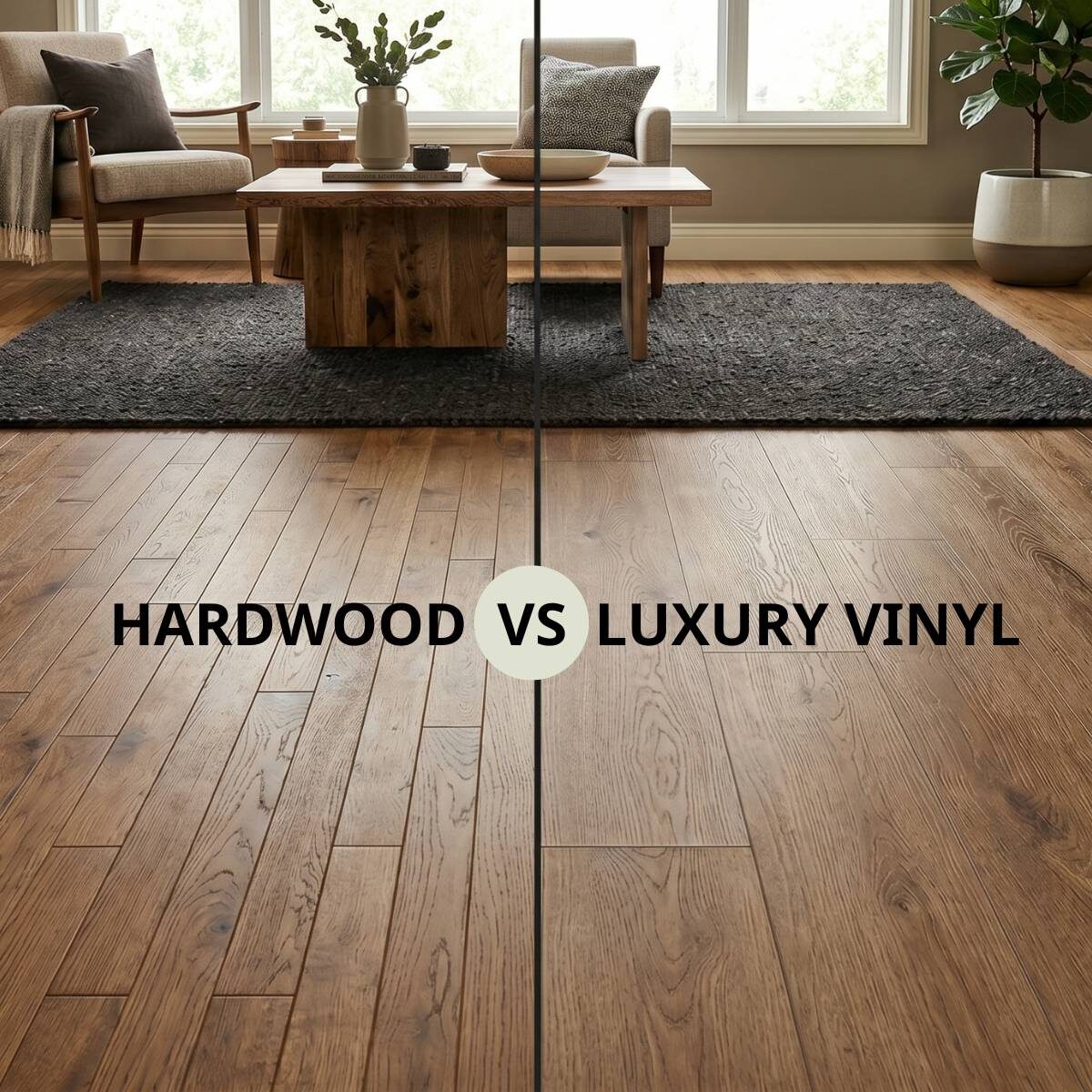
This was a fair criticism ten years ago. Today’s premium products from brands like COREtec and Torlys use embossed-in-register technology that aligns the visual texture to the photographic grain layer exactly. The result is a floor that most visitors can’t distinguish from real wood without getting on their hands and knees. The difference shows up in longevity and refinishing options, not in day-to-day appearance. If you’re not sure, come see samples side by side at our showroom and let the comparison speak for itself.
Still not sure which floor is right for your home? Call us at (403) 296-0985 or book a free estimate online, no obligation, no pressure. We’ll walk through your specific rooms, subfloor conditions, and budget before recommending anything.
Ready to Book Your Free Flooring Estimate in Calgary?
Your home is specific. Your floor decision should be too. Stop by our showroom any day this week, or call us directly and we’ll set aside time to assess your space properly, subfloor conditions and all.
Floorscapes 525 58 Avenue SE, Calgary, Alberta T2H 0P7 (403) 296-0985 Mon–Fri 9am–5pm | Saturday 10am–4pm
Honest advice. Real craftsmanship. Calgary’s floors, done right.