- Flooring
- Luxury Vinyl
What Is Luxury Vinyl Plank Made Of?
November 12, 2026
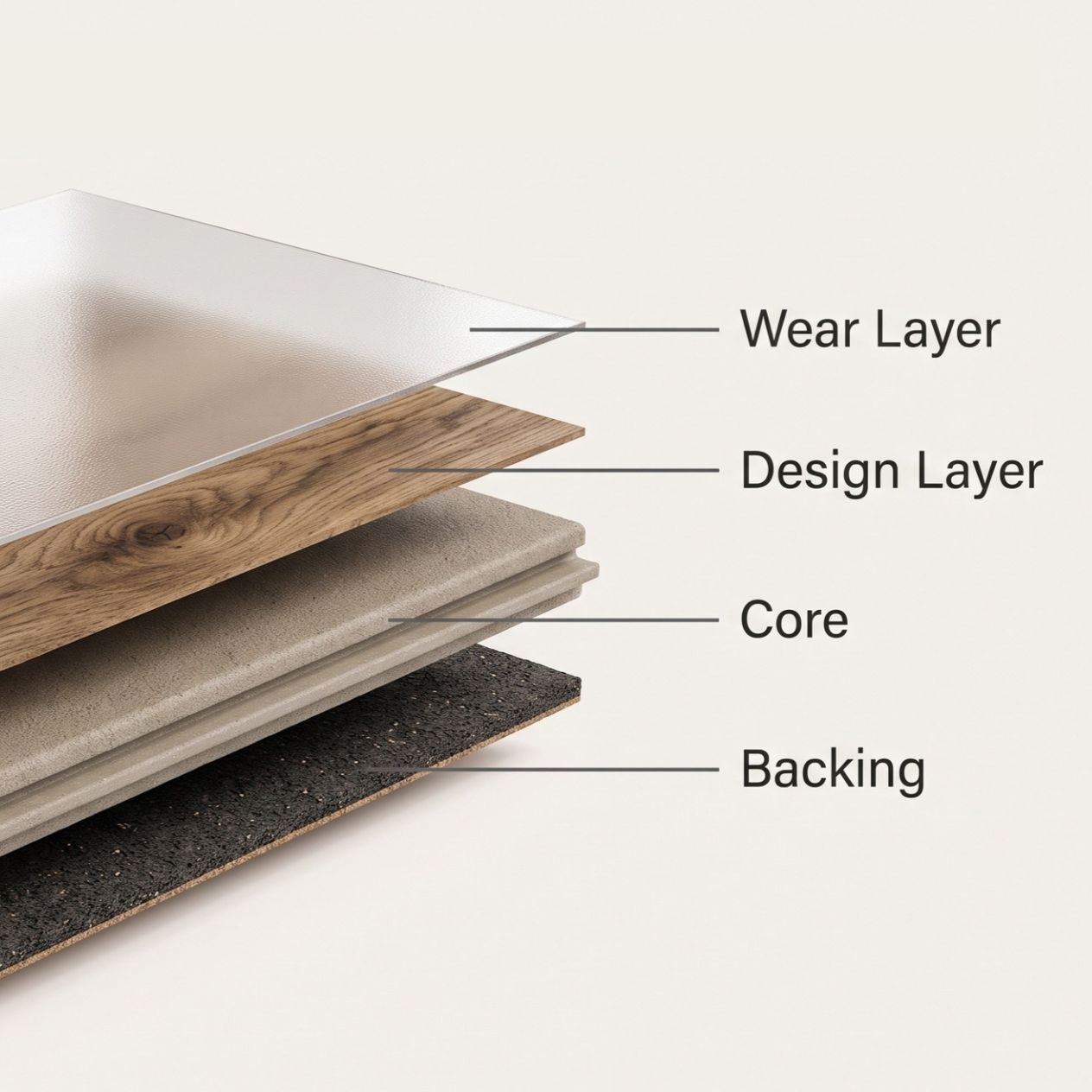
Luxury vinyl plank (LVP) is a waterproof floor made of layers: a vinyl core, a printed photographic design layer, a clear wear layer on top and often an attached underlay. The layers are pressed together with heat, coated with a protective finish and cut into click-together planks.
That smart, layered build is why LVP can pass for real hardwood or stone while shrugging off spills, pets and Calgary’s bone-dry winters. Below, we break down what’s inside each plank, how it’s made and what to look for when you shop.
What is luxury vinyl plank made of?
Luxury vinyl plank is made mostly of PVC (polyvinyl chloride), built up in four layers. Here’s what each one does, from the top down.
LVP layers
| Layer | What it is | What it does |
|---|---|---|
| Wear layer | A clear, tough PVC film, usually topped with a UV-cured urethane coating. Its thickness is measured in mils. | Takes the scratches, scuffs and stains so the design underneath keeps looking new. |
| Design layer | A high-resolution printed film created from photos of real wood or stone. | Gives each plank its look: grain, knots, colour and character. |
| Core | The thick middle of the plank: flexible PVC, a foamed WPC core or a dense SPC core made from limestone and PVC. | Provides strength, stability and waterproofing. This is where products differ most. |
| Backing and underlay | A balancing vinyl backing, often with a pre-attached cork or foam underlay. | Keeps the plank flat, cushions each step and quiets footsteps. |
SPC vs. WPC: what’s in the core?
Most click-together LVP today has a rigid core, and you’ll see one of two types on the label:
- SPC (stone plastic composite) blends limestone powder with PVC into a dense, solid board. It resists dents from furniture and holds its shape well through temperature swings.
- WPC (wood plastic composite, also called an expanded polymer core) is foamed, so it’s lighter, a little softer underfoot and quieter to walk on.
Both cores are waterproof. Flexible glue-down vinyl skips the rigid core and bonds straight to the subfloor, which stands up well to heavy foot traffic.
For Calgary homes, that stable core is a real plus. Vinyl doesn’t soak up moisture from the air the way solid hardwood does, so dry winter air and quick chinook swings are far less of a worry. Still deciding between the two? Read our guide to hardwood vs. LVP for Calgary homes.
How thick should the wear layer be?
Wear layers are measured in mils, or thousandths of an inch (12 mil is about 0.3 mm). As a rule of thumb from manufacturer MSI, 6 to 12 mil suits light residential use, 12 to 20 mil suits active homes and 20 mil or more is built for commercial spaces. If your home sees kids, pets or a winter’s worth of grit tracked in from the driveway, a 20 mil wear layer is money well spent. Pet owners will find more tips in our pet-friendly flooring guide.
How is luxury vinyl plank made, step by step?
Every plank goes through four stages on its way from raw material to your floor.
- Form the core. PVC resin is blended with stabilizers and, for SPC, limestone powder. Flexible vinyl is pressed into sheets between heated rollers (calendering). Rigid SPC and WPC cores are melted and pushed through a shaped die (extrusion).
- Fuse the layers. The backing, core, printed design film and clear wear layer are stacked and bonded with heat and pressure into one large sheet. Textured rollers then emboss the surface. On better products, the texture lines up with the printed grain, a detail called embossed-in-register.
- Coat and cure. A protective urethane finish is applied and hardened under UV light. The sheet is then cooled and stabilized so it lies perfectly flat.
- Cut, profile and inspect. The sheet is cut into planks and the edges are milled into a click-lock profile. An underlay is attached if the product has one, and every plank is inspected before it’s boxed.
The takeaway for shoppers? Two planks can look identical on a sample board and perform very differently in your home. Core type, wear layer thickness and the precision of the click joint are what separate a floor that lasts from one that doesn’t. Those are exactly the details our team walks you through in the showroom.
Is LVP the same as LVT?
Nearly. Luxury vinyl plank (LVP) and luxury vinyl tile (LVT) are built the same way, from the same layers. The difference is shape and style:
- LVP comes in long, narrow planks that mimic hardwood.
- LVT comes in squares and rectangles that mimic stone, ceramic or porcelain tile. Some glue-down LVT can even be grouted for a true tile look.
You’ll also hear “LVT” used as an umbrella term for the whole luxury vinyl category, which adds to the confusion. Explore both looks on our luxury vinyl flooring page, or read up on the benefits of stone-look vinyl.
Is luxury vinyl plank waterproof?
Yes. The vinyl core doesn’t absorb water, so LVP won’t swell, warp or delaminate the way wood and wood-fibre floors can. That makes it a go-to for kitchens, bathrooms, laundry rooms, mudrooms and basements.
Just remember that “waterproof” describes the plank, not the whole room. Water from a burst pipe or a flooded basement can still slip through seams and around edges to the subfloor, where it can lead to mould if it stays trapped. Everyday spills? Wipe them up and carry on. A real flood? The planks often need to be lifted so the subfloor can dry properly.
That’s where Floorscapes comes in. Our restoration flooring team helps Calgary homeowners replace water-damaged floors, whether insurance is covering a full rebuild or you’ve been cashed out and are managing the project yourself. If you’re dealing with water right now, start with what to do in the first 24 hours.
Where can I buy and install LVP in Calgary?
Right here in southeast Calgary. Floorscapes is a family-owned flooring store and installer at 525 58 Ave SE, and we’ve helped more than 20,000 Calgary homeowners find floors they love. Luxury vinyl plank is one of our core categories, with options from trusted brands like COREtec, TORLYS, Pergo, Mohawk and Shaw Floors.
In our showroom you can:
- Compare floating click-together and glue-down vinyl side by side
- Feel the difference between wear layers and surface textures
- See how plank colours look in natural light
- Get design advice matched to your home and lifestyle
Once you’ve found the one, we’ll measure your space and our in-house team will handle the installation. Want a sneak peek first? Browse our luxury vinyl catalog or upload a photo to our free flooring visualizer and see LVP in your own room in seconds.
Ready to see it up close? Book a showroom visit or call us at (403) 296-0985. Flexible financing is available, too.